04 — Process skid systems

Metering skid LNS-MS Series

Skid-mounted tanker loading metering systems for accurate, controlled and traceable custody-transfer — built around Coriolis mass flow measurement and engineered separately for each service.

01 — Product overview

Description

The LineSig LNS-MS Series is a modular family of skid-mounted metering systems engineered for accurate, controlled and traceable tanker loading, unloading and custody-transfer applications.

The family is built around Coriolis mass flow measurement as the preferred metering technology, integrated with an explosion-proof batch controller, flow regulation, process instrumentation, tanker grounding, overfill protection, ESD interfaces and terminal automation.

Rather than applying one generic metering package to every fluid, LNS-MS uses a service-specific engineering approach for refined liquid hydrocarbons, fuel oils and high-viscosity base/lube oils, pressurised LPG, and cryogenic LNG — so the skid configuration, metallurgy, pressure class, flow-control philosophy and safety architecture are selected against the actual product and operating conditions.

Typical process sequence

Product inlet → Isolation valve → Strainer / filter → Air/gas management where applicable → Pressure / temperature measurement → Coriolis mass flowmeter → Flow / batch control valve → Isolation / check valve → Loading arm or hose → Tanker. The exact sequence is adapted by service — atmospheric hydrocarbons may use an air eliminator, high-viscosity oils may need heating and tracing, LPG may require vapour-return/equalisation, and LNG requires cryogenic equipment, cooldown and BOG management.

02 — Design

Common LNS-MS advantages

  • Skid-mounted, factory-integrated construction
  • Coriolis mass flowmeter based measurement
  • Direct mass measurement, high repeatability
  • Explosion-proof batch controller
  • Preset quantity loading, automatic batch termination
  • Flow-control / batch valve
  • Pressure and temperature monitoring where required
  • Tanker static-grounding interface
  • Overfill protection interface
  • Emergency shutdown interface
  • Loading arm / hose integration
  • TAS / PLC / SCADA connectivity
  • Transaction and batch data logging
  • Factory assembly and pre-testing; reduced field installation

Custom engineering options

  • Single or duplex filtration
  • Proving / calibration connections
  • Additive injection, product sampling
  • Density measurement, temperature compensation
  • Standard-volume calculations
  • Vapour recovery / equalisation
  • Heating, tracing, insulation, recirculation
  • Top or bottom loading arms, loading hoses, emergency release coupling
  • Printer, RFID, remote I/O
  • Skid canopy, stainless-steel construction, custom hazardous-area certification

Choose a service

Four engineered service families, one platform

The LNS-MS Series shares a common platform but not the same process assumptions — meter selection, materials, heating/cooldown philosophy and safety architecture are engineered around each fluid.

A
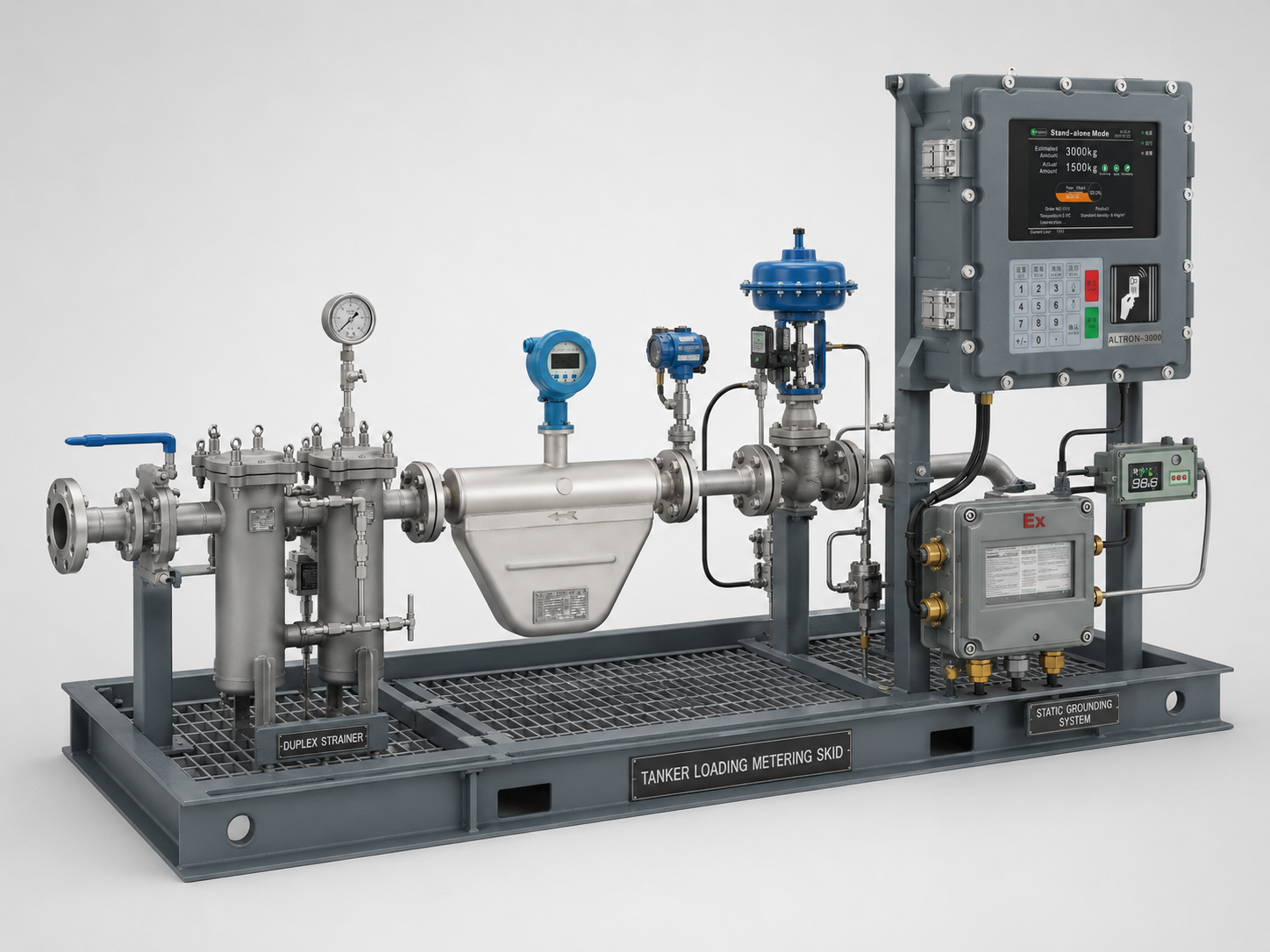
LineSig LNS-MS-LH liquid hydrocarbon metering skid

Liquid hydrocarbon LNS-MS-LH

For gasoline/PMS, diesel/AGO, kerosene, Jet A1 and similar refined liquid hydrocarbons.

View type →
B
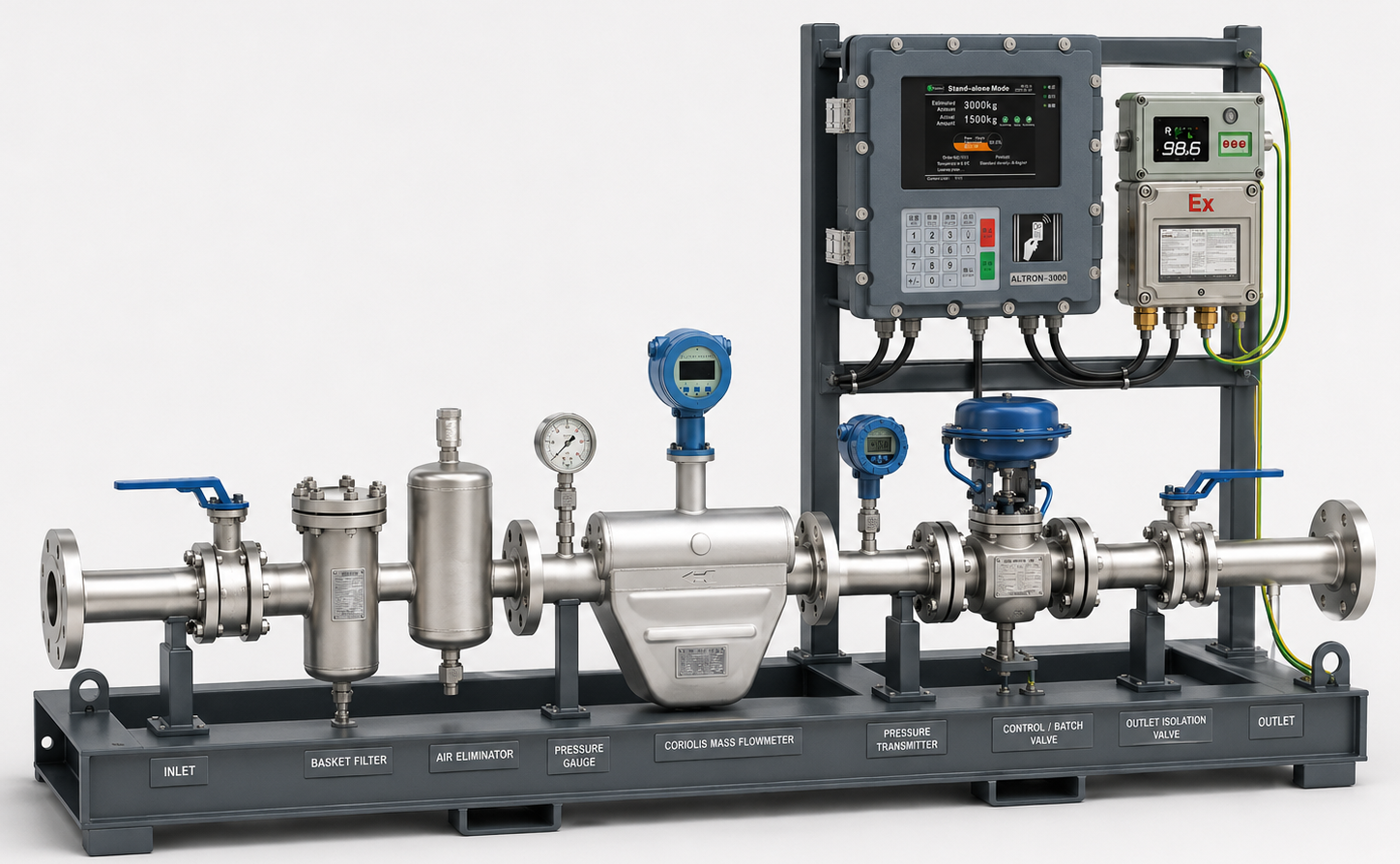
LineSig LNS-MS-FO fuel and base oil metering skid

Fuel / base oil LNS-MS-FO

For fuel oil, base oil, lube oil and other viscous or temperature-sensitive oil products.

View type →
C
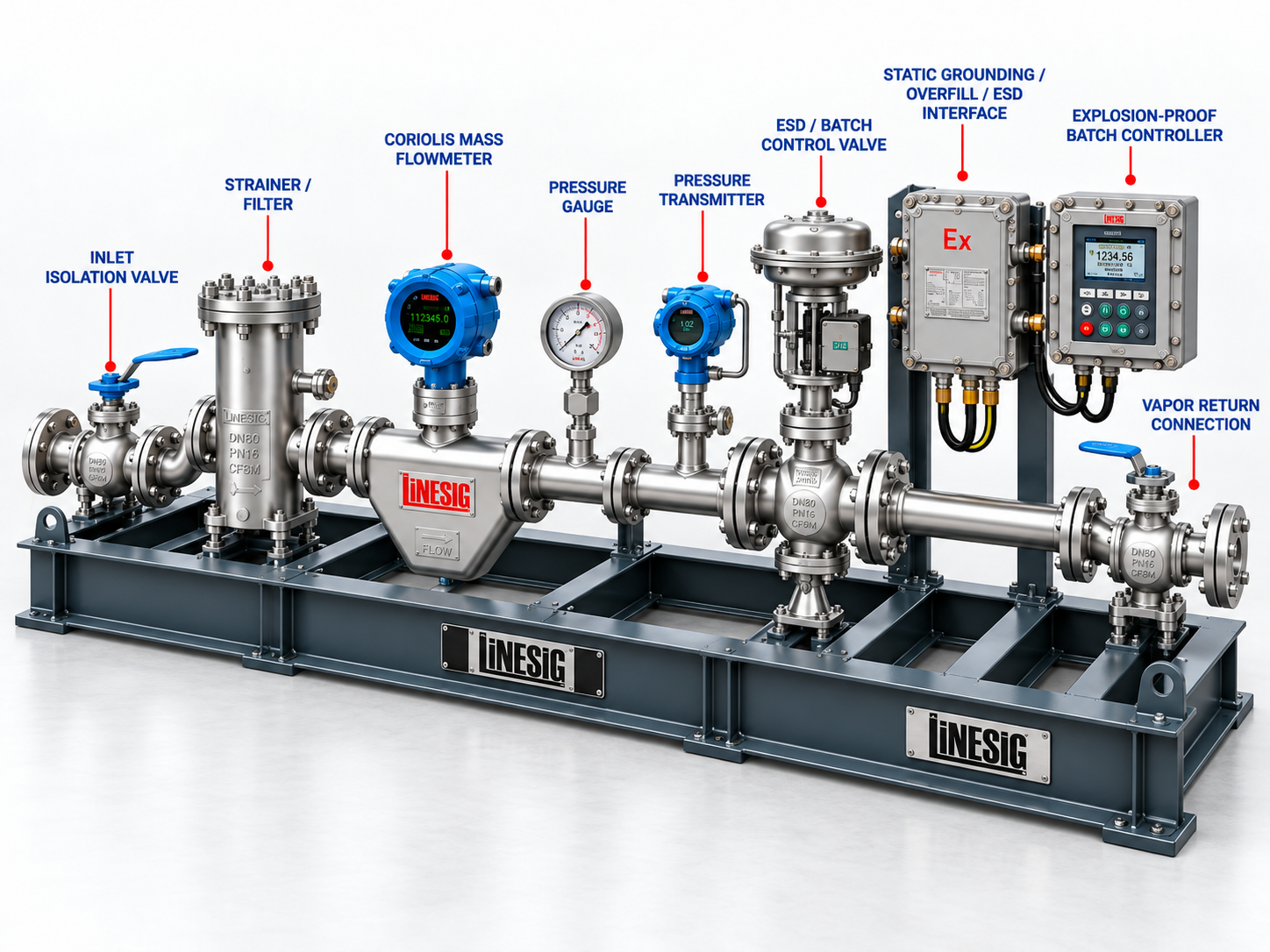
LineSig LNS-MS-LPG pressurised LPG metering skid

Pressurised LPG LNS-MS-LPG

For pressurised propane, butane and LPG loading, keeping product in the liquid phase throughout the metering train.

View type →
D
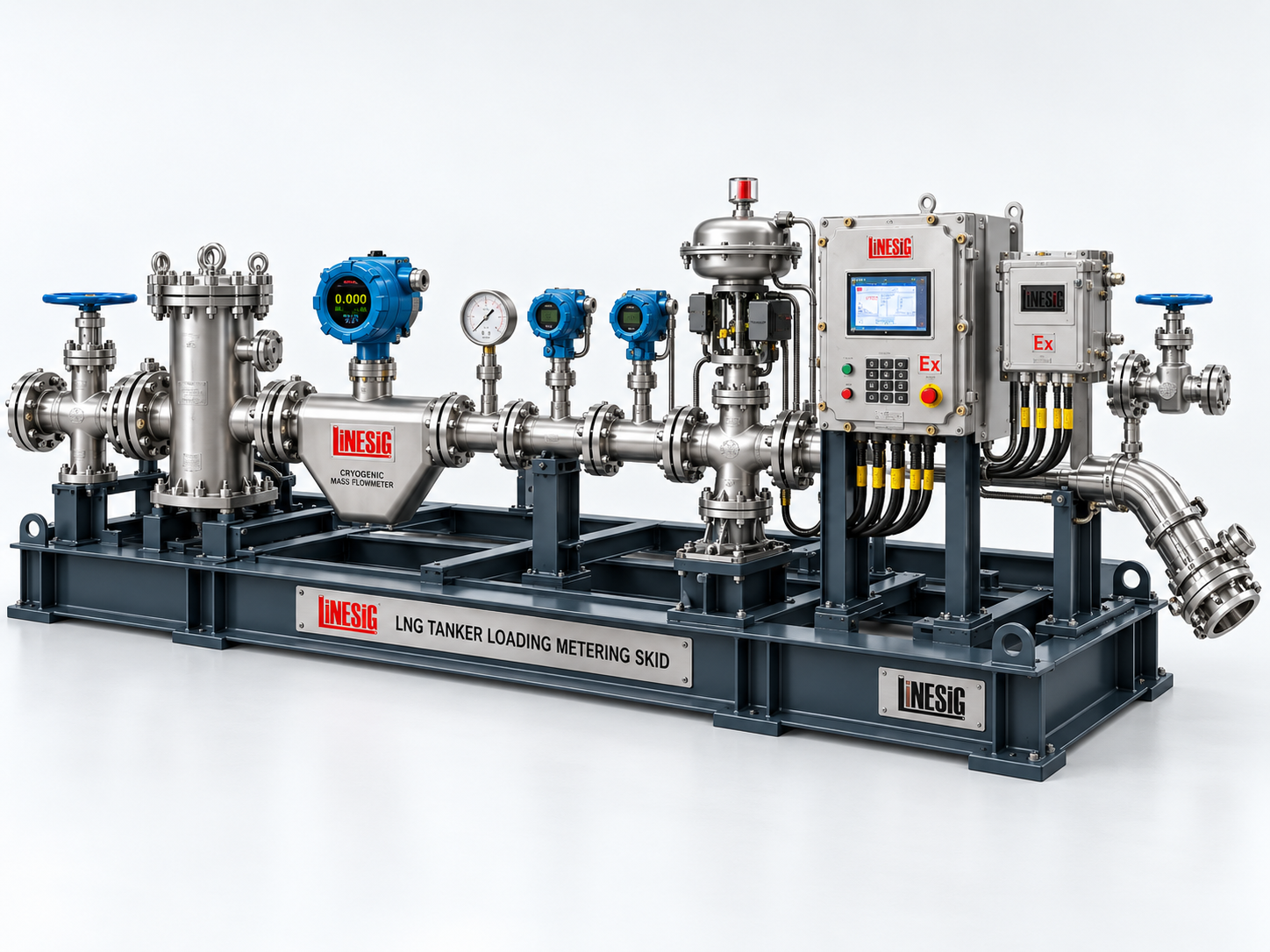
LineSig LNS-MS-LNG cryogenic LNG metering skid

Cryogenic LNG LNS-MS-LNG

A dedicated cryogenic platform for LNG loading and transfer — not a material substitution of the ambient-temperature skid.

View type →

03 — Control & safety

Batch control & terminal automation

Every LNS-MS skid is designed as a transaction system, not just a meter spool — the local batch controller and safety permissives coordinate with TAS/PLC/SCADA for order validation, transaction reporting and loading safety.

  • Preset batch entry, live flow indication
  • Delivered / target quantity, batch countdown
  • Start / stop command, FCV control
  • Mass totalisation, product selection
  • Alarm indication, transaction recording
  • Operator identification, RFID/card interface
  • Tanker ground verification and continuous monitoring
  • Automatic loading inhibit / shutdown on loss of ground
  • Independent tanker overfill input
  • ESD logic and local status indication
  • PLC / SCADA / DCS / Terminal Automation System interface
  • Historian, ERP, dispatch and vehicle-identification integration

04 — Downloads

Documents

05 — Ordering information

Project data required for final selection

  • Product / grade / composition
  • Minimum / normal / maximum loading rate
  • Batch size / tanker capacity
  • Design / operating pressure and temperature
  • Density, viscosity or vapour pressure over the operating range
  • Line size / flange rating and hazardous-area classification
  • Required metering accuracy / custody-transfer status
  • Loading method and arm/hose interface
  • Power supply, instrument air and TAS/PLC communication protocol
  • Material / corrosion requirements